NMN (Nicotinamide Mononucleotide) the supplement biohackers swallow every morning hoping to slow aging from the inside out. But a newer, more targeted application is gaining momentum in medical aesthetics: NMN and NAD+ delivered directly into the skin, either through microneedling or injectable mesotherapy, to rejuvenate the face at a cellular level.
This isn’t about swallowing a capsule and hoping some of it reaches your skin. It’s about placing NAD+, NMN, and supporting actives hyaluronic acid, PDRN, niacinamide, polynucleotides exactly where aging shows up first: the dermis and epidermis of the face, neck, and hands. In this article, we’ll break down the science behind cellular energy and skin aging, how NMN and NAD+ actually work in skin tissue, the difference between microneedled NMN boosters and injectable NAD+ mesotherapy, and what results you can realistically expect over time.
Why Skin Ages at the Cellular Level
Skin aging isn’t just about collagen breakdown or sun damage it starts inside the cell, with a molecule most people have never heard of: NAD+ (Nicotinamide Adenine Dinucleotide).
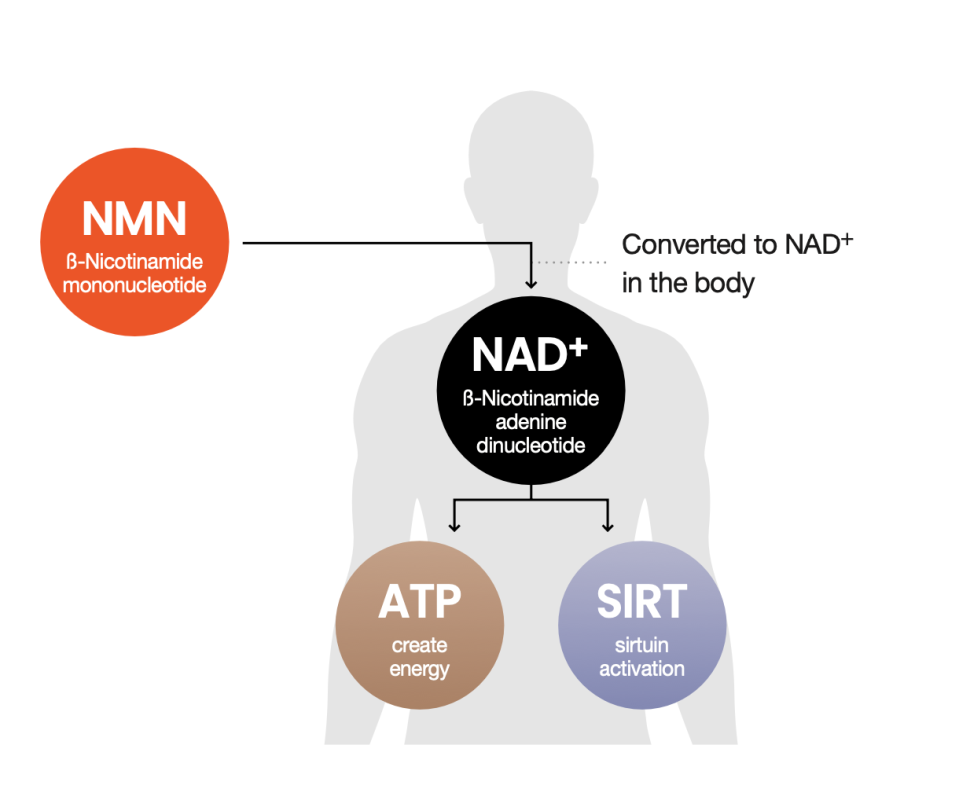
NAD+ is a coenzyme found in every living cell. It’s essential for:
Cellular energy production (ATP synthesis) the fuel that powers every repair process in your skin
DNA repair – fixing the micro-damage caused by UV exposure, pollution, and oxidative stress
Sirtuin activation – a family of seven proteins (SIRT1–SIRT7) that regulate the aging process itself
Oxidative stress regulation – neutralizing free radicals before they damage collagen and elastin
The problem is that NAD+ levels decline steadily with age. Research has tracked this age-related drop across adult populations, and lower NAD+ availability correlates with reduced cellular efficiency, slower repair, and visible signs of aging dullness, fine lines, sagging, and a compromised skin barrier. As fibroblasts (the cells responsible for producing collagen and elastin) run low on cellular energy, they simply can’t keep up with repair demands the way they did in your 20s.
This is the biological basis for NAD+ and NMN skincare: if declining NAD+ drives skin aging, replenishing it directly at the skin level should support skin vitality, regeneration, and resilience.
NMN vs NAD+ Why Both Matter (and Why They're Combined)
A common point of confusion is why aesthetic treatments often combine NMN and NAD+ rather than using just one. The answer lies in how each molecule behaves once it’s in the skin.
| NMN | NAD+ | |
|---|---|---|
| Full name | Nicotinamide Mononucleotide | Nicotinamide Adenine Dinucleotide |
| Role | Precursor to NAD+ | The active coenzyme itself |
| Stability | Small, stable molecule converts into NAD+ efficiently after absorption. | Larger, less stable molecule degrades faster and doesn’t penetrate or persist as easily on its own. |
| Action profile | Slower, sustained continuously replenishes NAD+ over time. | Fast, immediate cellular activation. |
| Best for | Long-term, cumulative rejuvenation. | Immediate energy and repair signaling. |
Because NMN is smaller and more stable, it acts as a steady supply line, converting into NAD+ inside skin cells over time. NAD+ itself, when delivered directly, provides a faster initial activation of cellular metabolism and sirtuin signaling. Used together, they create a layered effect: NAD+ for immediate cellular activation, NMN for sustained replenishment fast results that don’t fade quickly.
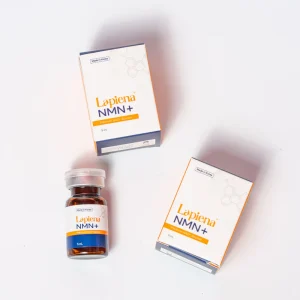
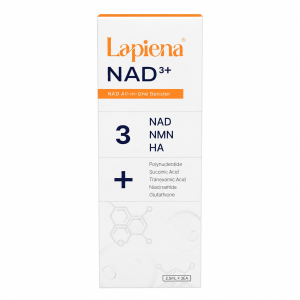
This is also why the two flagship products in this category a microneedled NMN booster and an injectable NAD+ mesotherapy formula are often used as complementary, not competing, treatments.
How NMN and NAD+ Actually Work in Skin Tissue
Once NMN or NAD+ reaches the dermis, several biological processes are triggered:
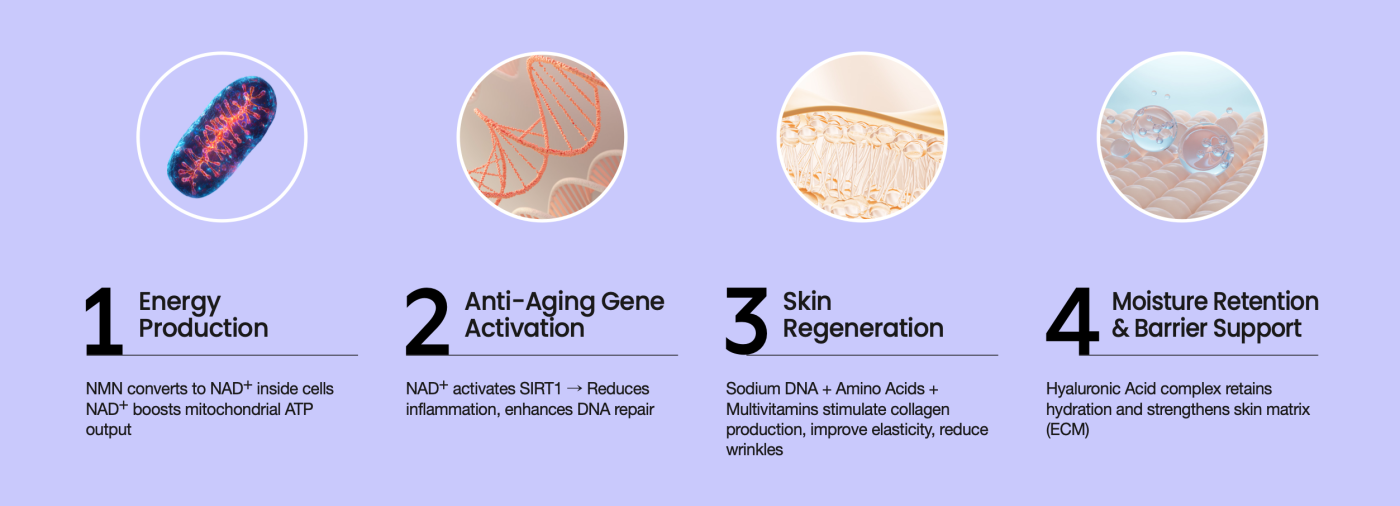
1. Mitochondrial energy production. NMN converts to NAD+ inside skin cells, which fuels mitochondrial ATP output. More cellular energy means fibroblasts and keratinocytes have the resources to repair damage and generate new collagen.
2. Sirtuin (SIRT) activation. NAD+ acts as a switch for the sirtuin family of proteins, particularly SIRT1. Sirtuins are dormant without adequate NAD+, and their activation is linked to reduced inflammation, enhanced DNA repair, and better regulation of the cellular aging process.
3. Collagen and elastin stimulation. Supporting ingredients like polynucleotides (PDRN) and adenosine stimulate fibroblasts directly, encouraging collagen and elastin synthesis, which improves firmness and elasticity.
4. Hydration and barrier reinforcement. Hyaluronic acid (HA) complexes work at the skin surface and dermal layer to restore moisture and support the skin’s structural matrix (the extracellular matrix, or ECM), while ingredients like panthenol (pro-vitamin B5) strengthen the lipid barrier.
5. Antioxidant and brightening support. Ingredients such as niacinamide, glutathione, and tranexamic acid often included in advanced formulations reduce pigmentation, calm inflammation, and protect against oxidative stress.
The result is a treatment that works on multiple levels simultaneously: surface hydration, dermal structure, and the cellular energy systems that drive long-term repair.
Two Delivery Methods: Microneedled NMN vs. Injectable NAD+ Mesotherapy
Not all NMN and NAD+ facial treatments are delivered the same way, and understanding the difference matters when choosing a treatment path.
1. Microneedled NMN Booster (Less Invasive)
A premium NAD+ booster formulated with NMN, NAD+, niacinamide, adenosine, PDRN, and panthenol can be delivered topically using a Microneedle Therapy System (MTS), radiofrequency (RF) microneedling, HIFU, fractional laser, or a traditional derma-roller. Microchannels created in the skin allow these active ingredients to bypass the stratum corneum and reach the dermis without a full injectable procedure.
This approach is well suited to patients who want:
A lower-downtime option
A treatment that can be layered with other in-clinic procedures (exosomes, PN/PDRN, hydrating HA boosters)
A gradual, cumulative improvement in skin quality, tone, and texture
A typical protocol involves a basic program of treatments spaced about a month apart initially, followed by an advanced maintenance program at two-to-three-month intervals to sustain results over the long term.
2. Injectable NAD+ Skin Booster (Mesotherapy)
The more advanced option combines NAD+, NMN, and hyaluronic acid into a single injectable mesotherapy formula, often enhanced with a “plus” complex of polynucleotides, succinic acid, tranexamic acid, niacinamide, and glutathione. This is typically administered using fine-needle mesotherapy or the classic 5-point injection technique across the face, targeting areas like the forehead, glabella (frown lines), nasolabial folds, marionette lines, and neck.
Because it’s injected directly into the dermis, this method delivers a combined effect:
HA acts at the skin surface and dermal layer for immediate hydration and plumping
NMN acts at the cellular precursor level, offering prolonged, gradual cellular vitality
NAD+ acts at the cellular and genetic level, providing progressive, long-lasting rejuvenation
This layered action profile instant hydration, sustained cellular support, and deep genetic-level repair is what distinguishes NAD+ mesotherapy from a standard hyaluronic acid skin booster.
A typical treatment course involves an initial series of 3–4 sessions spaced two to four weeks apart, followed by maintenance treatments every two to three months, and 2–3 sessions per year thereafter to sustain long-term skin quality.
Who Is a Good Candidate for NMN/NAD+ Facial Treatments?
These treatments are generally positioned as both preventive and corrective, suitable for a wide range of skin concerns, including:
Dull, tired, or stressed-looking skin
Early to moderate signs of aging fine lines, reduced firmness, loss of elasticity
Post-procedure recovery after laser, RF, microneedling, or injectables
Skin exposed to chronic oxidative stress (UV exposure, pollution, lifestyle factors)
A compromised or dehydrated skin barrier
Reduced collagen density without a desire to add facial volume
Because these treatments work on skin quality and cellular resilience rather than adding filler volume, they appeal to patients who want a natural, rejuvenated appearance rather than a change in facial contour.
What Results Can You Expect From These Boosters?
Because NMN and NAD+ work through two different mechanisms immediate cellular activation and gradual replenishment results tend to unfold in two phases:
Short-term: Improved hydration, a visible “glow,” and reduced surface dullness, largely driven by the hyaluronic acid and immediate NAD+ activation.
Long-term (over a full treatment course): Gradual improvements in firmness, elasticity, and tone as sirtuin activation, collagen stimulation, and DNA repair processes accumulate over weeks and months.
This is why consistency matters. A single session can produce a hydration boost, but the deeper anti-aging benefits genuine improvements in skin regeneration and resilience depend on completing an initial treatment series and following up with periodic maintenance, much like how NAD+ decline itself is a gradual, cumulative process that reversal strategies need time to address.
Safety Considerations
As with any active skincare or injectable treatment, proper protocol matters:
These formulations should be stored below 30°C, away from direct sunlight
Products are intended for single use only
Patients should be screened for sensitivity to vitamins or NAD+ prior to treatment
Treatments are generally not recommended for pregnant or breastfeeding individuals without medical guidance
Patients should avoid alcohol, smoking, sauna use, and direct sun exposure for at least 24 hours post-treatment
Any unexpected reaction should be evaluated by a qualified specialist
Working with a licensed practitioner experienced in microneedling or mesotherapy protocols ensures the treatment is administered safely and at the correct depth for optimal absorption.
NAD+ and NMN represent a shift in facial anti-aging away from treatments that simply fill or resurface the skin, and toward treatments that restore the cellular energy systems responsible for the skin’s own repair capacity. Whether delivered through a less invasive microneedled booster or a more comprehensive injectable NAD+ mesotherapy protocol using the 5-point technique, the underlying science is the same: replenish declining NAD+, activate sirtuins, fuel mitochondrial energy production, and give skin cells the resources they need to repair, regenerate, and maintain a firmer, more resilient structure over time.
As with most regenerative aesthetic treatments, results build cumulatively. Patients considering NMN or NAD+ facial treatments should think of them not as a one time fix, but as an ongoing investment in cellular-level skin health one designed to support the face’s ability to repair and renew itself for years to come.
NMN + NAD products featured in this Article